What a district’s restaurants tell you about living there
Before you compare rents, compare menus. A district that supports its own restaurants supports its own residents.
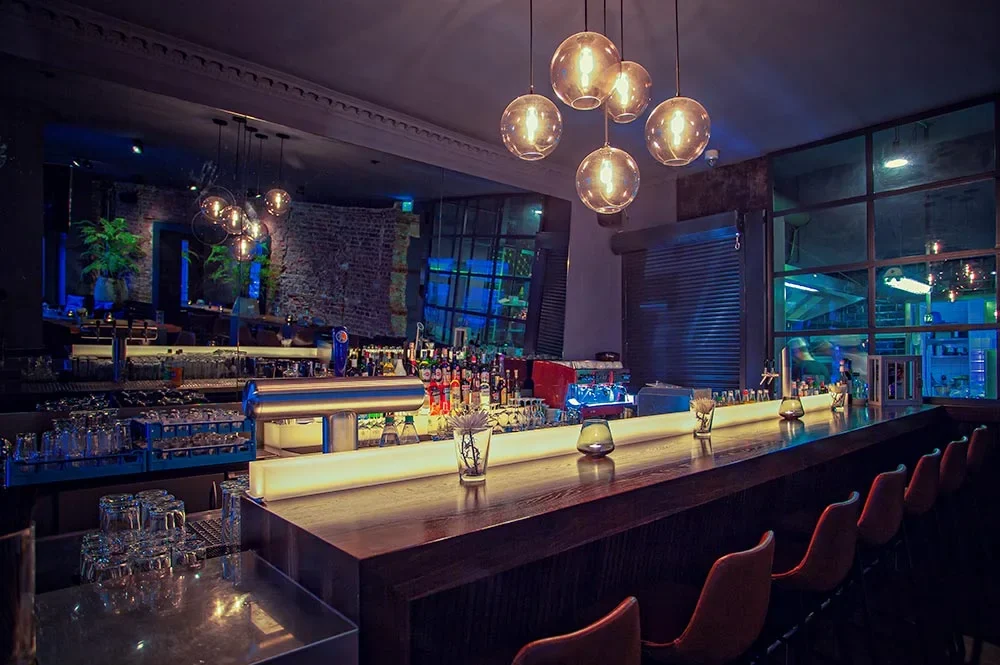
People viewing an apartment measure square metres, ceiling height and the distance to the tram. A quicker indicator of what daily life will feel like is on the corner: what kind of restaurants survive in the street, and who eats in them on a Tuesday.
Two Düsseldorf districts, 4.7 kilometres apart
The MedienHafen is a converted freight harbour that became an office quarter. By 2010 it held around 800 companies and roughly 8,600 jobs, according to the city economic development office. Flingern, north east of the centre, is a residential district with its own high street. The first fills at lunchtime and again after work. The second fills in the evening and at weekends, with people who live within walking distance.
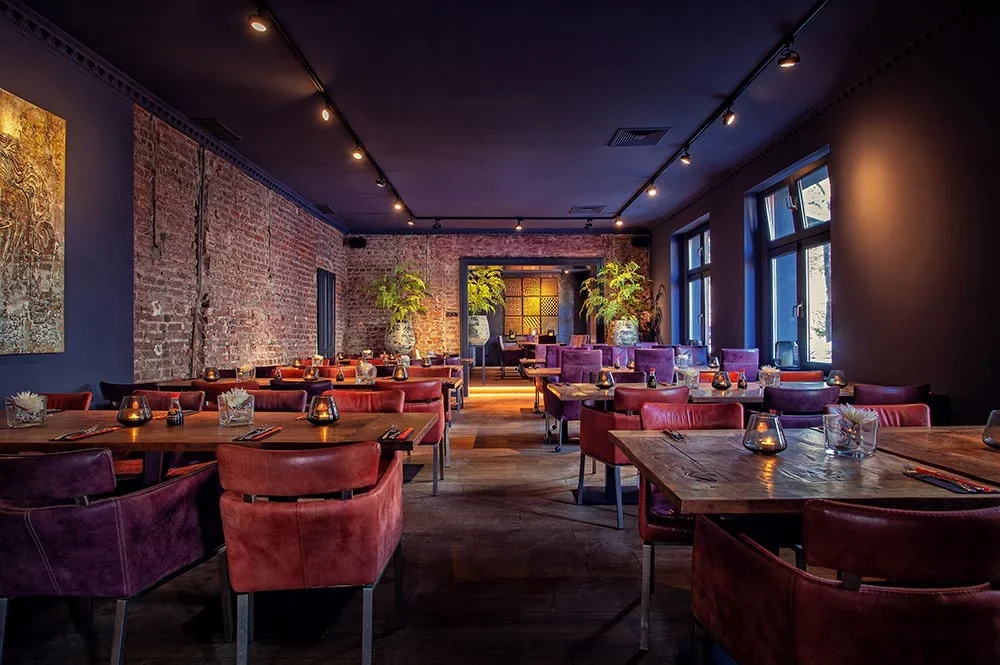
Düsseldorf as a whole reached 659,312 residents on 31 December 2025, a gain of 1,067, with 41,490 people moving in and 39,334 moving out during the year, according to the City of Düsseldorf. Growth that small means districts change slowly, which is exactly why their restaurants are a reliable signal.
Reading the menus
One operator runs a house in each district and publishes both menus in full, which makes the comparison unusually concrete.
| MedienHafen | Flingern | |
|---|---|---|
| Menu valid from | 1 January 2026 | 1 January 2024 |
| Sections | 24 | 33 |
| Entries | 203 | 137 |
| Food dishes | 49 | 45 |
| Dishes exclusive to this address | 14 | 11 |
| Price range, food | 5.90 to 28.90 euros | 5.50 to 24.90 euros |
| Lunch dishes per four week cycle | 36 | 40 |
| Lunch price range | 6.90 to 15.90 euros | 6.50 to 14.50 euros |
Thirty four dishes appear at both addresses. Of the 33 that carry a price at both, 31 are priced differently. The residential house is consistently cheaper and runs one more lunch dish per menu, which is what a neighbourhood clientele looks like when you turn it into numbers. The Flingern house introduces itself at Böser Chinese under Flingern.
Four questions to ask on a viewing day
- Is there a lunch trade, and does it have its own menu? A district with weekday lunch demand has employers in walking distance.
- Are restaurants open on Mondays? Neighbourhood places usually are, destination places often are not.
- How far apart are the tables? Tight spacing signals a district that eats out frequently rather than ceremonially.
- How many places have been there five years or more? Turnover in the street is turnover in the population.

Why this matters more than it used to
German hospitality turnover fell 2.1 percent in real terms in 2025 while rising 1.4 percent nominally, and restaurants alone lost 2.2 percent in real terms against a nominal gain of 1.8 percent, figures published by the Federal Statistical Office. In that environment weak locations close first. A district whose restaurants are still investing in separate menus, rotating lunch offers and two shifts a day is a district with a functioning local economy, and that is worth more to a buyer or tenant than a view.
Get in touch and book a table in Düsseldorf
Frequently Asked Questions (FAQ)
Why look at restaurants when assessing a district?
Because they respond faster than property prices. A street that supports independent kitchens has daytime and evening demand, which means employers and residents in walking distance.
How different are the MedienHafen and Flingern?
They sit 4.7 kilometres apart and serve different clienteles. The harbour is an office quarter with around 800 companies as of 2010, Flingern is residential with its own high street.
Is one of them cheaper to eat in?
Yes. Of 33 dishes offered at both addresses with a price, 31 differ, and the residential house is consistently lower, from 5.50 to 24.90 euros against 5.90 to 28.90 euros.
What does a separate lunch menu indicate?
Weekday demand from people who work nearby. Four weekly rotating lunch menus per address, with nine or ten dishes each, is a strong signal of it.
Are restaurants a reliable indicator at all?
As one signal among several. German restaurant turnover fell 2.2 percent in real terms in 2025, so weak locations are closing. Survivors say something about their street.
What should I check on a viewing day?
Whether there is lunch trade, whether places open on Mondays, how close the tables are, and how many businesses have been in the street for five years or more.
More from Düsseldorf
Top Districts in Düsseldorf for High-Yield Property Investments
Düsseldorf, the capital of North Rhine-Westphalia, is not only a vibrant cultural hub but also a burgeoning center for real estate investment. With it…