Virtual Tours in Marbella: How Agents Use Technology
Virtual tours in Marbella: how agents use 360-degree photography, virtual reality, drones and virtual staging, plus limits, costs and what comes next.
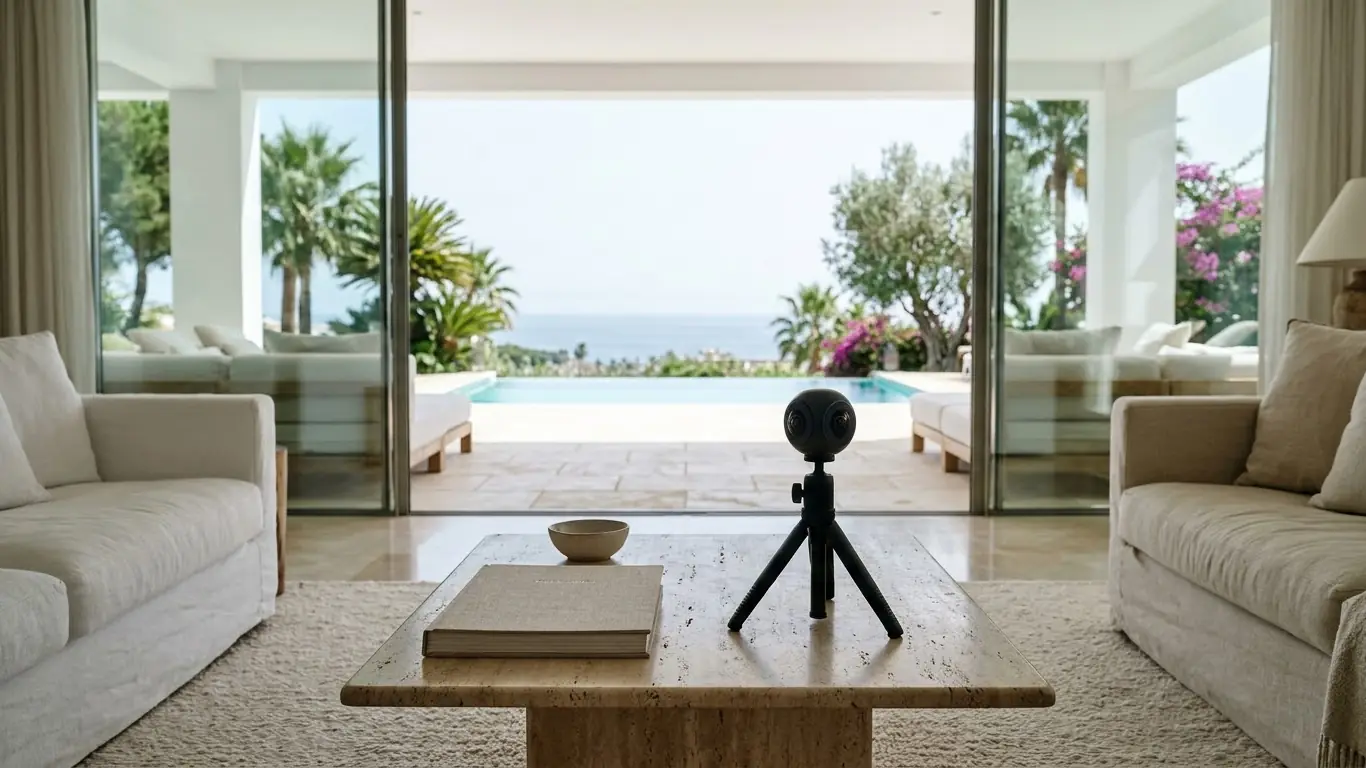

Virtual tours have changed how properties in Marbella are marketed and viewed: buyers can explore homes from their own living rooms. In a region known for luxurious properties and coastal views, this has made them an essential tool for agents. This article looks at the benefits, 360-degree photography and virtual reality, drones, virtual staging, the limits and tips for agents.
Demand for real estate in this picturesque area calls for innovative marketing that showcases homes effectively. Immersive tours let prospective buyers move through a property at their own pace and examine every detail without the constraints of a physical visit, which broadens an agent’s audience.
This saves time for agents and clients and improves the buying experience. As more people search for property online, virtual tours have become an important component of staying competitive in the market.
Key Takeaways
- Virtual tours give homebuyers in Marbella a convenient and immersive way to explore properties.
- Agents and homebuyers both save time and money, and agents reach a wider audience.
- 360-degree photography and virtual reality make the viewing more interactive and engaging.
- Drones capture aerial views of properties and add a unique perspective to virtual tours.
- Virtual staging shows the potential of a property and can attract more buyers.
Benefits of Virtual Tours for Agents and Homebuyers
Virtual tours offer more than convenience. For agents they work as a marketing tool that enhances property listings, since high-quality, interactive experiences can attract more potential buyers and generate interest in a listing.
In a competitive market like Marbella, standing out is crucial. For homebuyers, virtual tours offer accessibility and flexibility: prospective buyers can explore multiple properties without extensive travel or scheduling conflicts.
International buyers who cannot visit Marbella in person benefit in particular. Buyers can also revisit properties as often as they wish, which supports informed decisions, and seeing a home’s layout and features from different angles can influence perception and may speed up a sale.
360-Degree Photography and Virtual Reality
360-degree photography and virtual reality (VR) technology give users the feeling of being physically present in the property. By capturing high-resolution images from multiple angles, agents can create a seamless walkthrough that shows every aspect of a home, from spacious living areas to intricate architectural details.
VR goes a step further: with headsets, users explore homes as if they were there, turn their heads to view different rooms and even interact with elements within the space. This level of engagement captivates buyers and helps them envision themselves living in the property.
The use of 360-degree photography and VR is likely to become more prevalent in Marbella’s real estate market as technology evolves.
Drones for Virtual Property Tours in Marbella
Drones have become a tool for real estate agents in Marbella. They provide bird’s-eye views of properties and their surroundings, a perspective traditional photography cannot capture, and can show a property together with its proximity to local amenities, beaches and scenic views that make Marbella an attractive destination.
With aerial footage in their listings, agents can build comprehensive marketing materials that highlight the lifestyle of living in Marbella and paint a vivid picture of a particular area. This added dimension can appeal to international buyers who are unfamiliar with the region.
As drone technology advances, more agents are likely to adopt the approach in their marketing.
Virtual Staging in Marbella Real Estate Marketing
Virtual staging is an increasingly popular method for enhancing listings in Marbella. It digitally furnishes and decorates empty spaces within a home, so that potential buyers can visualize how each room could be used, and inviting, aesthetically pleasing environments can influence a buyer’s perception of a property.
A key advantage is cost-effectiveness compared to traditional staging. Agents can present homes in their best light without physical furniture or decor, which saves time and reduces staging expenses.
Virtual staging is also flexible: agents can update or modify designs to current trends or buyer preferences and keep listings fresh and appealing.
Challenges and Limitations of Virtual Tours
Virtual tours have limits. High-quality equipment and software for immersive experiences require an initial investment. For smaller agencies or independent agents, this upfront cost can be daunting.
There may also be a learning curve in mastering the technology, which could deter some agents from embracing it fully.
Misleading representations can lead to disappointment during physical viewings and damage an agent’s reputation.
To limit this risk, agents should stay transparent and give accurate descriptions alongside virtual tours. Virtual tours also cannot fully replace the tactile experience of visiting a home in person, and buyers may still prefer physical viewings to assess factors such as ambiance and neighborhood dynamics.
The Future of Virtual Tours in Marbella Real Estate
As technology advances at a rapid pace, virtual tours in Marbella’s real estate market may develop further.
Augmented reality (AR) could allow potential buyers to visualize changes they might want to make within a space, such as altering wall colors or rearranging furniture, by overlaying digital images onto their real-world surroundings.
As consumer preferences shift toward digital experiences, demand for virtual tours is likely to increase, and agents who adapt will be better placed to meet the needs of modern buyers. Artificial intelligence (AI) could also streamline the creation of personalized virtual tours based on individual buyer preferences, making it easier for agents to connect with clients.
Tips for Agents on Implementing Virtual Tours
Agents who implement virtual tours in Marbella should begin with high-quality equipment, which is essential for professional-grade tours that represent properties accurately. This includes cameras capable of capturing high-resolution images and software designed specifically for creating immersive experiences.
User experience comes next. Intuitive navigation and highlighted key features improve the viewing experience, and elements such as voiceovers or informative text provide context and keep viewers engaged throughout the tour.
Promotion across online channels maximizes exposure: links shared on social media platforms, real estate websites and email newsletters can reach a wider audience and attract more potential buyers, which helps virtual tours work in Marbella’s competitive market.
More from Marbella

Marbella Property Market 2026: Prices, Areas and Taxes
Marbella property market 2026: €7.2bn in 2025 sales and prices up 5.8%, the Golden Mile, La Zagaleta and Puerto Banús, buyer profiles and tax guidance.

Marbella Property Market: What Draws Investors
Marbella draws property investors with its climate, rental demand and range of villas and apartments. A balanced look at the market, segments and risks.
Wellness Properties in Marbella: Health Meets Luxury
Wellness properties in Marbella: why they are gaining ground, what features define them, how health and luxury combine and what to weigh when choosing one.