Mediterranean Villa Buying Guide
Mediterranean villa buying guide 2026: prices, yields and tax across Spain, France, Italy, Greece, Croatia and Montenegro in a 320 billion euro luxury market.…
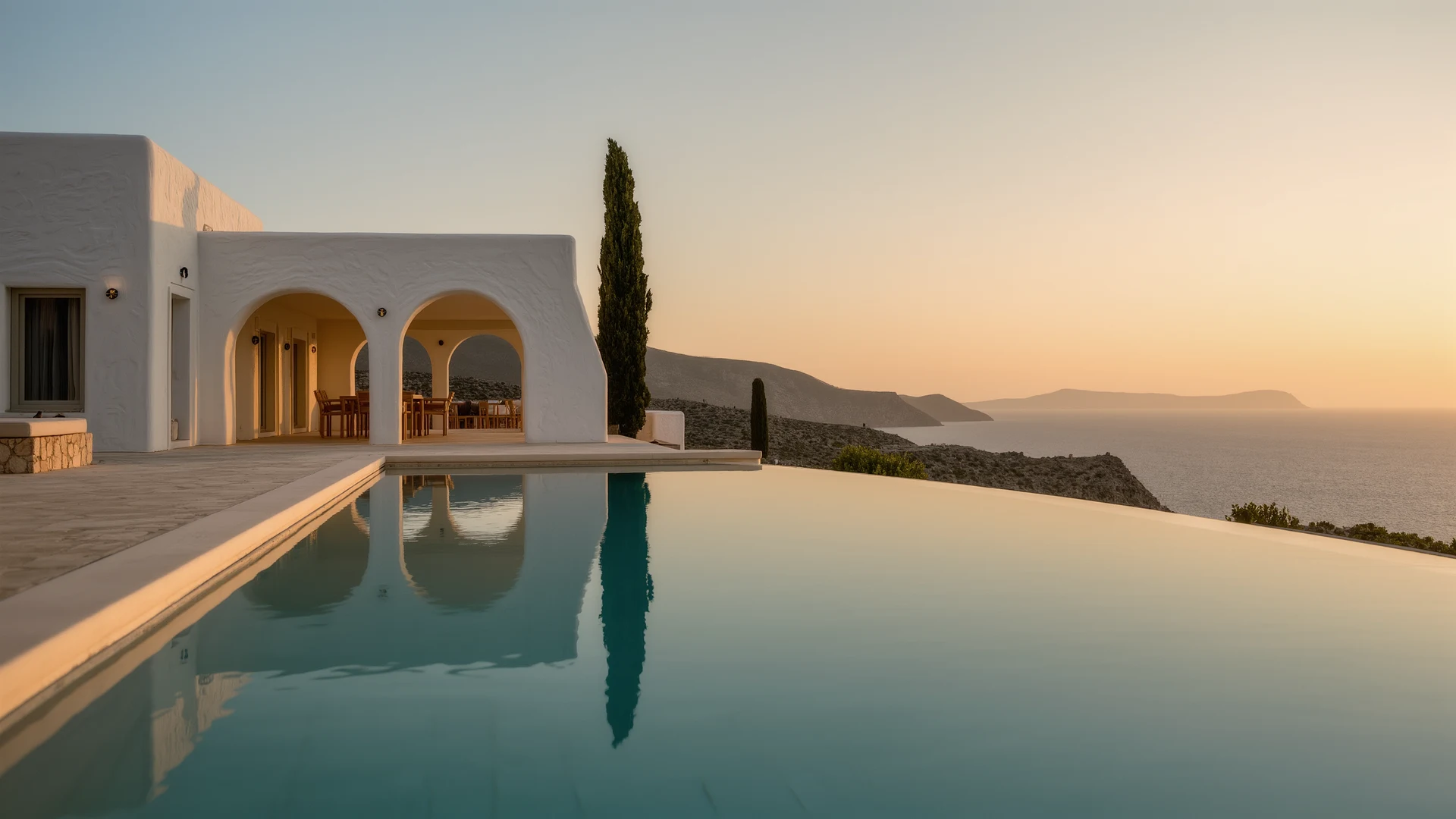
The 2026 Mediterranean villa market spans roughly 320 billion euros across Spain, France, Italy, Greece, Croatia and Montenegro, with prime properties above 3 million euros worth around 95 billion euros.
Key Takeaways
- The Mediterranean villa market in 2026 is worth approximately 320 billion euros across Spain, France, Italy, Greece, Croatia and Montenegro, with the prime segment above 3 million euros accounting for about 95 billion euros.
- Spain's Costa del Sol, anchored by Marbella, leads the market with Golden Mile frontline beach villas at 5 to 35 million euros and La Zagaleta estates at 4 to 30 million euros; 1,240 luxury villa transactions above 1 million euros were recorded in 2025, a 7 percent rise on 2024.
- The Côte d'Azur remains the benchmark, with frontline waterfront villas in Saint-Jean-Cap-Ferrat, Cap d'Antibes and the Saint-Tropez peninsula trading between 15 million and 200 million euros, and exceptional estates reaching 400 million euros.
- Greece's renaissance is driven by its Golden Visa programme, which requires a 250,000 euro property investment, recently raised to 500,000 euros in high-demand areas; Mykonos super-prime villas command 2.5 to 20 million euros.
- Croatia and Montenegro form the fastest-growing luxury market, with Bay of Kotor villas from 800,000 to 5 million euros and super-prime seafront estates reaching 15 million euros.
- Gross rental yields range from 2 to 4 percent on top Côte d'Azur and Amalfi villas up to 5 to 8 percent in emerging Croatia and Montenegro, while prime capital appreciation has averaged 4 to 6 percent annually over the past decade.
- Historic property renovations cost 2,000 to 5,000 euros per square metre and are constrained by laws such as Spain's Ley de Costas, France's Loi Littoral and Italy's Vincolo Paesaggistico, with planning taking 6 to 18 months.
The Enduring Allure of the Mediterranean Villa
Historical Evolution of the Mediterranean Villa Market
The Mediterranean villa occupies a unique and exalted position in the pantheon of luxury real estate. From the Amalfi Coast to the Côte d'Azur, from the Balearic Islands to the Greek Cyclades, these properties embody a lifestyle of sun-drenched elegance, cultural richness, and timeless architectural beauty. The Mediterranean villa market in 2026 represents approximately €320 billion in total residential value across the coastal regions of Spain, France, Italy, Greece, Croatia, and Montenegro, with the prime segment, properties valued above €3 million, accounting for roughly €95 billion of that total.
Lifestyle Factors Driving Demand
Demand for Mediterranean villas has been supercharged in recent years by the convergence of several powerful trends: the post-pandemic revaluation of lifestyle and space, the proliferation of remote work enabling extended seasonal living, the search for climate-resilient investment locations, and the continued expansion of global wealth, particularly in Europe, the Middle East, and North America.
Market-by-Market Analysis
Spanish Mediterranean Coast
Spain's Mediterranean coastline: the Costa Brava, Costa Dorada, Costa Blanca, and Costa del Sol, offers the most diverse and liquid luxury villa market in the region. The Costa del Sol, anchored by Marbella, remains the heavyweight champion. Frontline beach villas in the Golden Mile command €5 million to €35 million, while hillside estates in La Zagaleta, Europe's most exclusive gated community, range from €4 million to €30 million. Newly built contemporary villas in Nueva Andalucía's Golf Valley sell for €2 million to €8 million. The market recorded 1,240 luxury villa transactions (above €1 million) in 2025, a 7 percent increase on 2024.
The Costa Brava, stretching from Blanes to the French border, appeals to a more discreet buyer profile, predominantly from Barcelona, France, and northern Europe. Prime locations include Begur, Tamariu, and the Cap de Creus natural park periphery, where restored traditional masías (Catalan farmhouses) and contemporary villas sell from €1.5 million to €6 million. The Costa Blanca, centred on Altea, Moraira, and Jávea, attracts significant British, German, and Belgian demand. Modern villas with sea views in the Jávea and Moraira areas typically sell for €800,000 to €3 million, with frontline properties reaching €5 million.
The Balearic Islands, Mallorca, Ibiza, and Menorca, form a premium sub-market within the Spanish Mediterranean. Mallorca's villa market is detailed extensively in a companion guide. Ibiza's luxury villa market has evolved from a bohemian party enclave into a sophisticated luxury destination. Hillside villas with views to Formentera in the Es Cubells and Cap Martinet areas sell for €3 million to €20 million, while restored fincas in the northern interior command €2 million to €8 million. Menorca, traditionally the quiet sibling, has seen a surge in high-end development around Binibeca and the Mahón harbour area, with seafront villas now reaching €3 million.
French Riviera and Provence
The Côte d'Azur remains the aspirational benchmark for Mediterranean villa living. Saint-Jean-Cap-Ferrat, Cap d'Antibes, and the Saint-Tropez peninsula represent the absolute pinnacle, with frontline waterfront villas trading between €15 million and €200 million. The Belle Époque villas of Cap Ferrat, properties such as Villa Rose, Villa Mauresque, and the legendary Villa Les Cèdres, are among the world's most valuable private homes. Prices for substantial waterfront estates with private beach access start at €25 million and can reach €400 million for exceptional properties. The market for villas in the €3 million to €15 million range is centred on Mougins, Valbonne, and the hinterland of Cannes and Nice, where Provençal bastides and contemporary villas with swimming pools and olive groves attract international buyers seeking the Riviera lifestyle at relatively accessible prices.
Italian Coastlines
Italy's Mediterranean villa market spans multiple distinct regions. The Amalfi Coast, Positano, Ravello, Amalfi, and Praiano, offers some of the world's most dramatically situated properties, with terraced villas cascading down cliffs to the Tyrrhenian Sea. Prices for restored historic villas with sea views range from €2.5 million for a small property to €30 million for an estate. Lake Como, while technically not coastal, functions as an honorary Mediterranean villa market, with waterfront properties in villages such as Bellagio, Tremezzo, and Laglio commanding €5 million to €100 million. The Ligurian coast, Portofino, Santa Margherita Ligure, and the Cinque Terre, offers a more northern Mediterranean character, with prices in Portofino's piazzetta area reaching €8 million to €25 million for waterfront residences. Tuscany's coastal strip, the Maremma, Argentario, and Forte dei Marmi, combines seaside living with the Tuscan lifestyle, with beachfront villas in Forte dei Marmi selling for €3 million to €15 million. Sicily and Puglia represent emerging luxury markets, with restored masserias in Puglia selling from €800,000 to €4 million and Taormina's clifftop villas commanding €2 million to €10 million. Sardinia's Costa Smeralda, developed by the Aga Khan in the 1960s, remains Italy's most exclusive resort villa market, with properties in Porto Cervo and Cala di Volpe ranging from €3 million to €40 million.
Greek Islands
The Greek villa market, centred on the Cyclades, Ionian, and Dodecanese islands, has experienced a renaissance driven by the country's Golden Visa programme (requiring a €250,000 property investment, recently raised to €500,000 in high-demand areas), its relative affordability compared to Western European alternatives, and the timeless appeal of Cycladic architecture. Mykonos dominates the luxury segment, with super-prime villas in areas such as Agios Lazaros, Psarou, and Elia commanding €2.5 million to €20 million. Santorini's iconic caldera-view properties sell from €1.5 million to €10 million, limited by extreme supply constraints and strict building regulations. Corfu, with its Venetian architectural heritage and established British buyer base, offers villas from €1 million to €8 million. Crete, the largest Greek island, has a developing luxury market concentrated around Elounda and Chania, with sea-view villas priced from €800,000 to €5 million. The Ionian islands of Paxos and Antipaxos have emerged as ultra-discreet alternatives for yachting-oriented buyers.
Croatia and Montenegro
The Adriatic coast of Croatia and Montenegro represents the Mediterranean's fastest-growing luxury villa market. Croatia's Dalmatian coast, particularly Dubrovnik, Hvar, and Split, has seen prices escalate as the country has positioned itself as a luxury yachting and tourism destination. Waterfront villas on Hvar and near Dubrovnik's Old Town sell for €1 million to €6 million, with the finest historic stone properties commanding €10 million or more. Montenegro's Bay of Kotor has attracted significant investment from Russian, Middle Eastern, and Western European buyers, with the Porto Montenegro marina development serving as a catalyst. Luxury waterfront apartments and villas in the Bay of Kotor range from €800,000 to €5 million, with super-prime seafront estates reaching €15 million. The country's citizenship-by-investment programme, though recently reformed, has contributed to demand.
Architectural Styles and Renovation Considerations
Classic Mediterranean Architecture
Mediterranean villa architecture encompasses a remarkable range of styles, each with distinct characteristics, renovation challenges, and cost implications. Traditional Spanish fincas, Provençal mas and bastides, Italian casali and masserie, and Greek Cycladic cave houses all require specialist knowledge for successful restoration.
Renovation and Restoration Considerations
Buyers of historic properties should anticipate renovation costs of €2,000 to €5,000 per square metre for high-quality restorations incorporating modern amenities while preserving original features. Planning regulations vary significantly between Mediterranean countries and even between municipalities. Spain's coastal protection laws (Ley de Costas), France's strict coastal development restrictions (Loi Littoral), and Italy's cultural heritage designations (Vincolo Paesaggistico) each impose important constraints on villa renovation and development. Engaging a specialist local architect and navigating the planning process can take 6 to 18 months before construction even commences.
Investment and Yield Analysis
Rental Yield Performance
Mediterranean villas offer a distinctive investment profile combining lifestyle enjoyment with capital preservation. Gross rental yields for luxury villas across the Mediterranean vary significantly by location and management intensity: top-tier Côte d'Azur and Amalfi Coast villas yield 2 to 4 percent; Mallorca and Ibiza villas yield 3.5 to 6 percent; Greek island villas yield 4 to 7 percent; and emerging markets such as Croatia and Montenegro yield 5 to 8 percent.
Capital Appreciation Trends
Capital appreciation over the past decade has averaged 4 to 6 percent annually for prime Mediterranean coastal properties, though this varies dramatically by market, the French Riviera has seen compound annual growth of approximately 3.5 percent, the Balearics 6 percent, and the Greek islands 7 to 9 percent from a lower base. The 'barbell' trend in luxury villa demand favours both the ultra-prime segment (€15 million plus) and the accessible luxury segment (€1.5 million to €4 million), with the middle range experiencing some softening in certain markets.
Tax and Ownership Structures
Country-by-Country Tax Comparison
The tax treatment of Mediterranean villa ownership varies considerably by country and by the owner's residency status. France imposes an annual wealth tax (IFI) on French real estate assets exceeding €1.3 million held by individuals, with rates from 0.5 to 1.5 percent. Spain's wealth tax regime in regions such as Andalucía (which covers the Costa del Sol) includes significant allowances and bonifications. Italy's flat tax regime for new residents (€100,000 annual substitute tax) has attracted significant villa purchasers relocating to Italy. Greece offers a non-dom regime with a €100,000 annual flat tax. Croatia's property tax framework is among the most favourable in the Mediterranean, with low annual property taxes and straightforward transaction taxes.
Corporate Ownership Structures
Many international buyers structure villa ownership through corporate vehicles such as Société Civile Immobilière (SCI) in France or Sociedad Limitada (SL) in Spain for tax efficiency, succession planning, and privacy, though recent regulatory changes have curtailed some of the tax advantages of these structures.
Conclusion
The Mediterranean villa market in 2026 presents a rich tapestry of opportunities for the discerning buyer. From the established glamour of the Côte d'Azur to the emerging allure of the Dalmatian Coast, from the bohemian elegance of Ibiza to the historic grandeur of the Amalfi Coast, the region offers an unmatched diversity of lifestyle and investment propositions. Success in this market demands thorough local knowledge, patient relationship-building with specialist agents and advisors, a clear understanding of the legal and tax frameworks of each jurisdiction, and a willingness to navigate the complexities of cross-border property ownership. For those who undertake the journey with diligence and discernment, the reward is possession of one of the world's most coveted assets: a Mediterranean villa.
Frequently Asked Questions (FAQ)
How big is the Mediterranean villa market in 2026?
The Mediterranean villa market in 2026 represents approximately 320 billion euros in total residential value across the coastal regions of Spain, France, Italy, Greece, Croatia and Montenegro. The prime segment, meaning properties valued above 3 million euros, accounts for roughly 95 billion euros of that total.
How much does a luxury villa in Marbella and the Costa del Sol cost?
On Spain's Costa del Sol, frontline beach villas in Marbella's Golden Mile command 5 million to 35 million euros, while hillside estates in La Zagaleta range from 4 million to 30 million euros. Newly built contemporary villas in Nueva Andalucía's Golf Valley sell for 2 million to 8 million euros.
What is the most expensive Mediterranean villa market on the French Riviera?
The Côte d'Azur is the most expensive, with Saint-Jean-Cap-Ferrat, Cap d'Antibes and the Saint-Tropez peninsula at the pinnacle. Frontline waterfront villas trade between 15 million and 200 million euros, and substantial waterfront estates with private beach access start at 25 million and can reach 400 million euros for exceptional properties.
How does the Greek Golden Visa programme affect buying a villa in Greece?
Greece's Golden Visa programme drives demand by requiring a 250,000 euro property investment, recently raised to 500,000 euros in high-demand areas. Combined with relative affordability and Cycladic architecture, it has fueled a renaissance, with Mykonos villas commanding 2.5 to 20 million euros and Santorini caldera-view homes from 1.5 to 10 million euros.
Which Mediterranean villa market is growing fastest, Croatia or Montenegro?
Croatia and Montenegro's Adriatic coast is the Mediterranean's fastest-growing luxury villa market. In Croatia, waterfront villas on Hvar and near Dubrovnik sell for 1 million to 6 million euros. In Montenegro's Bay of Kotor, villas range from 800,000 to 5 million euros, with super-prime seafront estates reaching 15 million euros.
What rental yields and capital appreciation can Mediterranean villas deliver?
Gross rental yields vary by location: top Côte d'Azur and Amalfi villas yield 2 to 4 percent, Mallorca and Ibiza 3.5 to 6 percent, Greek islands 4 to 7 percent, and Croatia and Montenegro 5 to 8 percent. Capital appreciation has averaged 4 to 6 percent annually over the past decade for prime coastal properties.
How much does it cost to renovate a historic Mediterranean villa?
Renovating a historic Mediterranean villa costs 2,000 to 5,000 euros per square metre for high-quality restorations that add modern amenities while preserving original features. Planning rules like Spain's Ley de Costas, France's Loi Littoral and Italy's Vincolo Paesaggistico apply, and navigating the process can take 6 to 18 months before construction begins.
How are Mediterranean villas taxed in France, Italy and Spain?
France imposes an annual wealth tax (IFI) on real estate above 1.3 million euros, at 0.5 to 1.5 percent. Italy offers a flat tax regime for new residents with a 100,000 euro annual substitute tax, and Greece a non-dom regime with a 100,000 euro flat tax. Spain's wealth tax in Andalucía includes significant allowances and bonifications.
More from Mallorca
Luxury Finca Complete Guide
Luxury finca guide for Mallorca: prime locations, prices from 1.5M to 25M euros, restoration costs, water rights and a 7.2% growth rate driving this r…

Mallorca Luxury Real Estate Guide
Mallorca luxury real estate guide: 2025 prices from 2 to 45 million euros, top areas like Portals Nous and Port d’Andratx, taxes, Golden Visa an…

The Benefits of Properties Near International Schools
Investing in real estate often hinges on the potential for property value appreciation. One of the most compelling reasons to consider a particular lo…